Skip to content

Or try searching by Category and/or Location

The strenght of West Iceland lies in its natural wonders. The highlights include the Snaefellsjökull National Park, beautiful lava fields and caves, the most powerful hot spring in Europe, all kinds of waterfalls and mountains of all sizes and shapes. One of the most spectacular wonders is the Langjokull glacier, which can now be seen from underneath in a manmade ice cave.

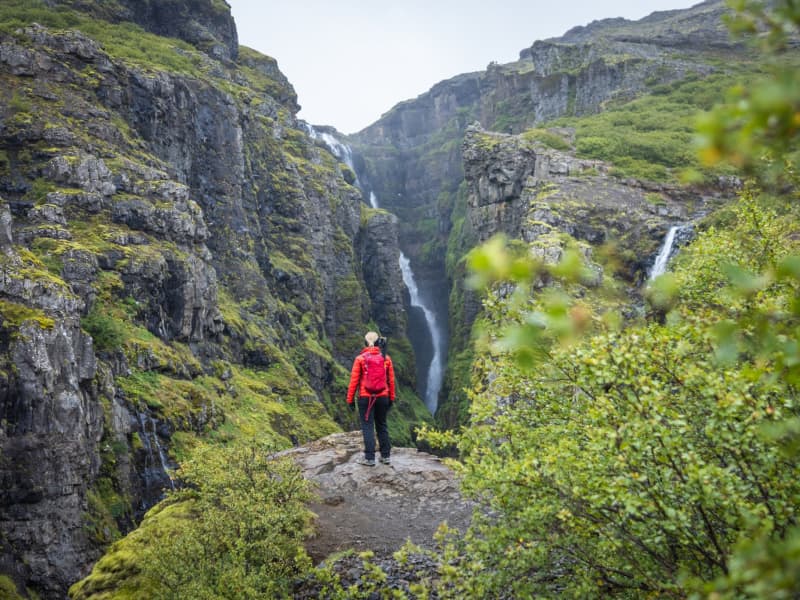
Glymur, waterfall in Hvalfjord
Attention - During winter the hiking path can be dangerous! Proper equipment and hiking experience is essential! Iceland’s tallest waterfall, is located in Botnsdalur valley, Hvalfjörður. Leading up to it is a fabulous hiking path that should only be attempted by those not daunted by heights or challenging hikes. Glymur is in the river Botnsá that runs out of Hvalvatn, which is a lake closed by molten lava, some 160 metres deep. In Hvalfjordur in West Iceland you can stand in awe before Iceland’s highest waterfall. Standing by the fall you'll have a good view of the surrounding landcape, which is is particularly attractive, as Hvalfjordur is widely considered one of Iceland's most beautiful fjords.The walk, approximately 4 hours roundtrip, will take you from the trailhead at Botnsa river through spectacular scenery including a rock arch and will have you crossing a crystal clear river on a strategically placed log.
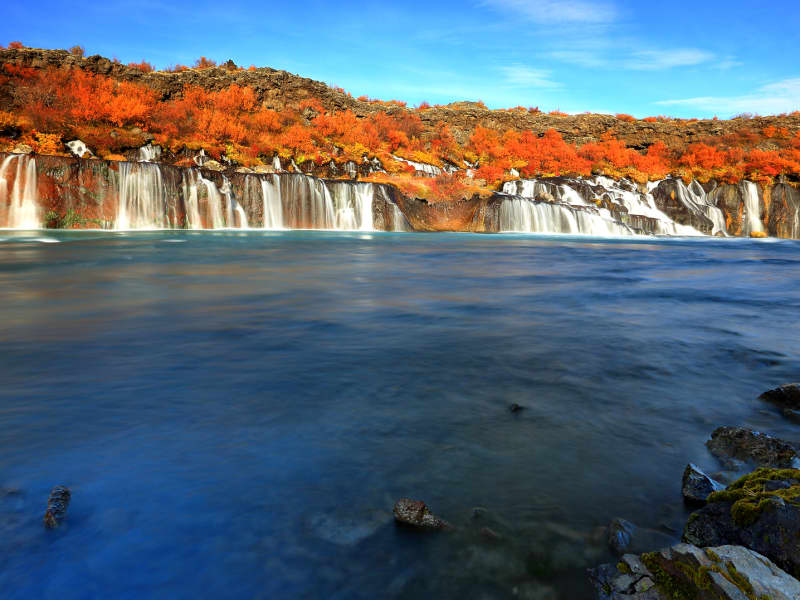
Hraunfossar, lava waterfalls
Hraunfossar - Lava Falls - are beautiful and unusual natural phenomena. Clear, cold springs of subterranean water seep through the lava and run as tiny waterfalls and rapids into the Hvita River. Hraunfossar have been protected since 1987. There is a viewpoint at the car park offering an amazing view over the Lava Falls and Hvita River. Restaurant and souvenir shop open all year round.
Djúpalónssandur
Djupalonssandur is a beautiful pebbled beach, with a series of rocks of mysterious form emerging from the ocean. It is one of the few areas that lead down to the sea along this coast with its high dramatic cliffs. Watch out for the famous ghosts roaming the place! The rests of a shipwreck can be seen on the beach. On the beach there are also big stones which people tried to lift and test their strength in the days of the fishing stations: Fully Strong 154 kg, Half-Strong 100 kg, Weakling 54 kg and Bungler 23 kg. Weakling marked the frontier of wimphood, any man who couldn't lift it was deemed unsuitable for a life as a fisherman.
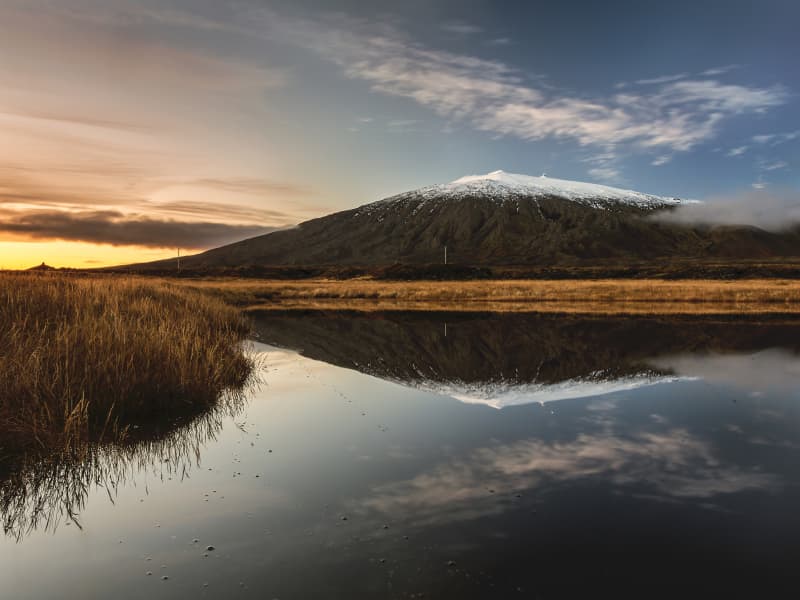
Snæfellsjökull glacier
The Snæfellsjökull glacier at Snaefellsnes peninsula is 1446m above sea level. The glacier is an active volcano, having been built up through numerous eruptions during the last 800,000 years. Many believe the glacier to be one of the seven main energy centres of the earth and its mystique is noticed by many. The glacier plays big role as the Center of the Earth in the novel Journey to the Center of the Earth (1864) by Jules Verne. Snæfellsjökull is a part of the Snæfellsjökull National Park which  was established on June 28, 2001. The Park's purpose is to protect and conserve the areas unique landscape, indigenous plant and animal life as well as important historical relics. At the same time, the Park is meant to allow visitors easier as well as improved opportunities to get to know the area. Driving on the Glacier is prohibited except with a permission from the park ranger.  
Langisandur, sandy beach in Akranes
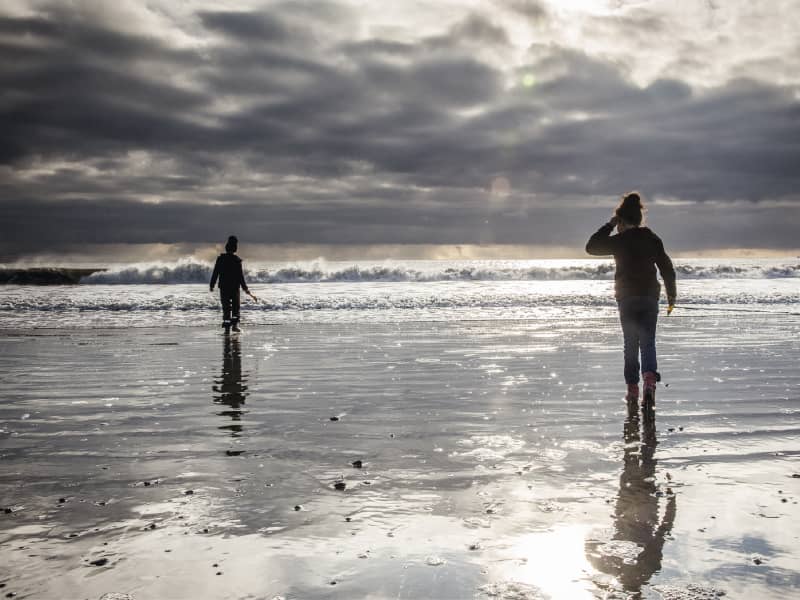
The coastline around Akranes is rich with bird life and there are many different types of beaches along the coast. One of these is Langisandur, a sandy beach and one of the most popular outdoor areas of Akranes. Langisandur is one of three Blue Flag beaches in Iceland. Guests are welcome to join the local Sea Swimming Club at Langisandur Beach three times a week. More information at the Akranes Tourist Information Office, e-mail info@akranes.is, tel: +354 894 2500.
Skorradalur Valley in Borgarfjord
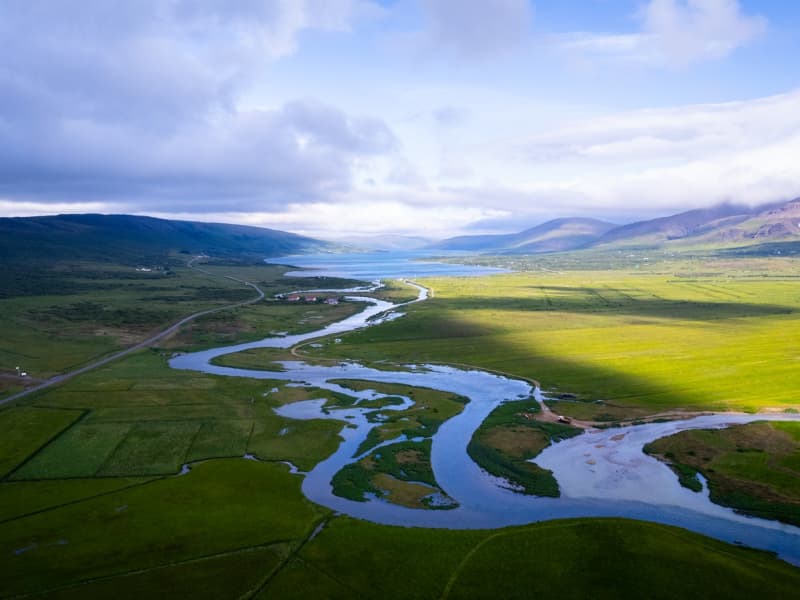
Skorradalur is the southernmost valley in Borgarfjörður. The Skorradalur lake fills up most of the valley but the lowlands in the west are wide moorlands. There is very little traditional farming practiced today but summerhouses are becoming increasingly common and forests are growing from year to year. The Hvanneyri parish is situated at Fitjar which is deep in the valley. Forestry at Stálpastaðir is in the northern part of the valley where there are beutiful hiking trails. The camping site at Selsskógur is surrounded by lush vegetation, creating good shelter on the banks of the Skorradalur lake. 
Deildartunguhver hot spring
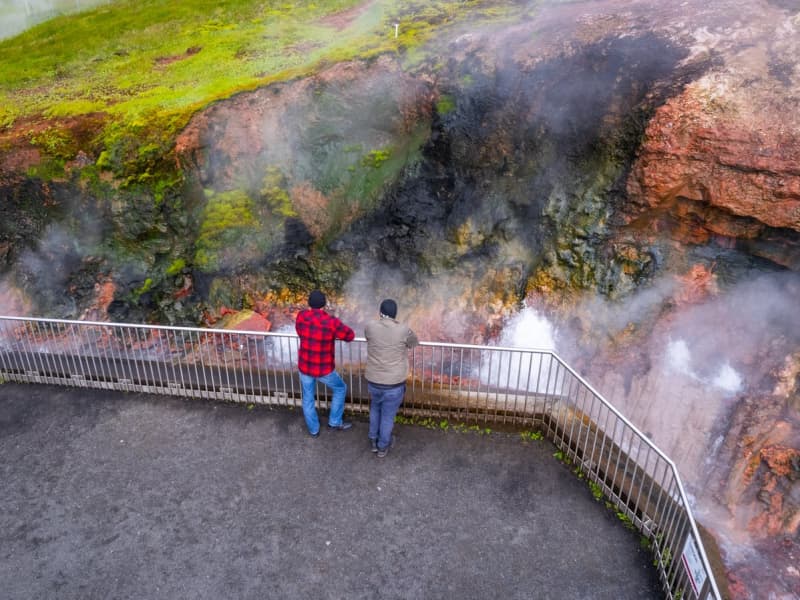
Deildartunguhver highest flow hot spring in Europe !Deildartunguhver is Europe's most powerful hot spring. It provides 180 l/sec of 100°C hot water.Most of the water used for central heating in the towns of Borgarnes and Akranes is taken from Deildartunguhver. The hot water pipeline to Akranes is 64 km long, the longest in Iceland and the water is about 78 - 80 degrees when it reaches Akranes. If you take a shower anywhere within a 65 km radius of the spring, you have already bathed in the hot water from this powerful spring!
Danielslundur Forest
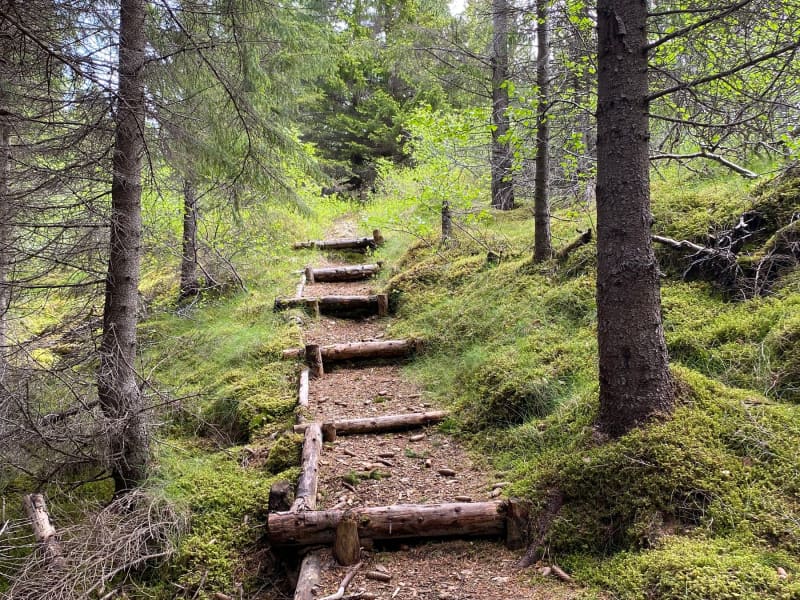
Danielslundur in Borgarfjord is a Forest, open to everyone. Parkings just out of road one. Ideal to stop and enjoy nature, have picnic or just walk around on the paths. Table, benches and grill are there to use. 
Flatey Island Breiðafirðir
Beautifully kept old houses in cheerful colours line the dusty path through the settlement of Flatey island. Walk through it, and at the end of the settlement, the path becomes even narrower and more crooked, taking you through a dense population of birds, consisting mainly of Arctic terns. Two families stay on the island throughout the winter, but many more migrate during the summer, mainly for leisure but also to serve tourists. In a charming way, it feels very much like a movie set. And so it is. Many movies are set on the island, most notably The Honour of the House based on a short story by Nobel Prize winner Halldór Laxness, and White Night Wedding, a movie by Baltasar Kormákur. In fact, Baltasar’s father painted the unusual altar piece in the island’s church, making it worthy of a visit. In summertime, a ferry goes to Flatey twice a day from Stykkishólmur and Brjánslækur, and, albeit less frequently, a passenger boat offers connection to Reykhólar.
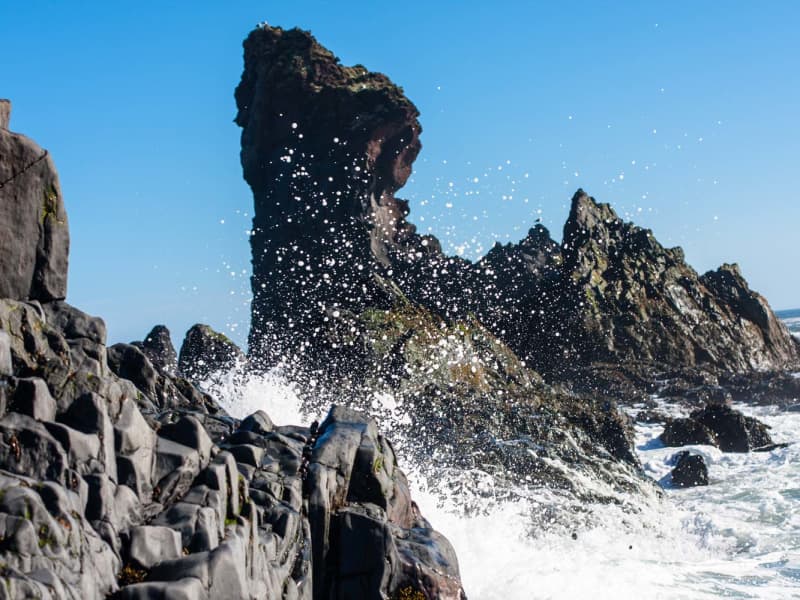
Londrangar basalt cliffs in Snaefellsnes
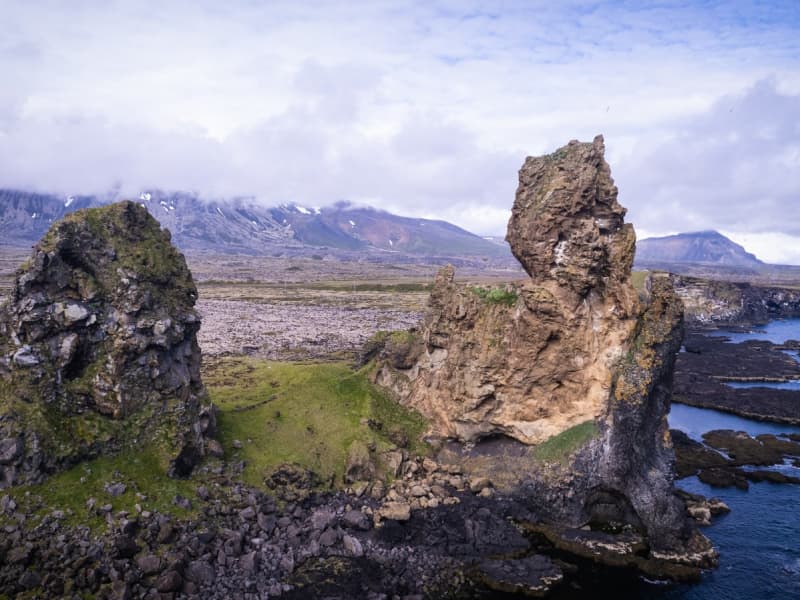
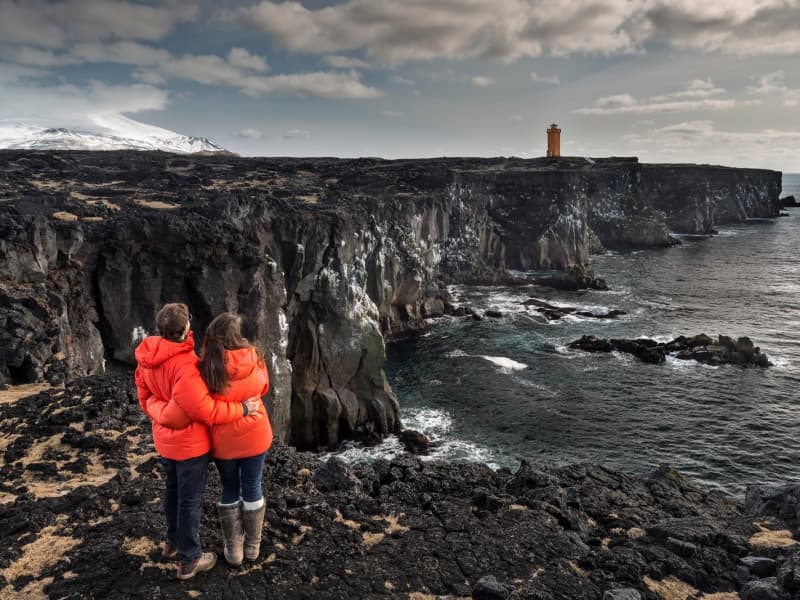
Uniquely-formed remnants of ancient basalt volcanic dikes sticking out from the sea. Londrangar and the hill Svalthufa are the remains of a crater, which has been eroded to its present form by the sea. The farmers in the area never made or make hay on the hill, because it is said to belong to the elves living in the area. Younger lava fields surround this old crater ruin. The higher pillar (75m) was first climbed in 1735 and the lower (61 m) in 1938. Below the hill you may find Thufubjarg cliff where according to a folktale the poet Kolbeinn Joklaskald had an encounter with the Devil. On these cliffs, puffins and fulmars have their nests.
Langjokull Glacier
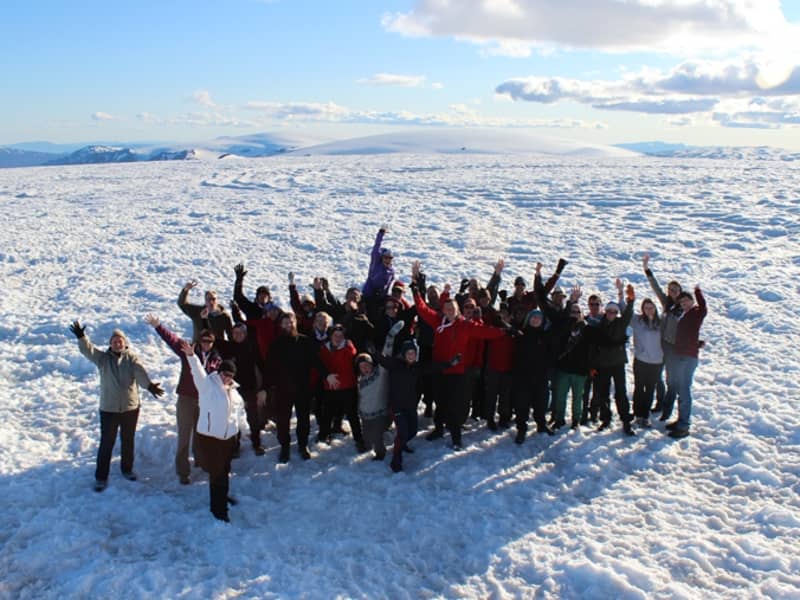
Langjökull, located in Borgarfjörður, is Iceland’s second-largest glacier, covering an area of 950 km². It offers some of the best accessibility among glaciers in Iceland. Visitors can join tours on the glacier itself or explore the man-made ice tunnels, which are the largest of their kind in the world. On a clear day, the views from the glacier are absolutely breathtaking. The glacier’s highest peak rises to 1,355 meters, with most of its surface lying at an elevation of 1,200–1,300 meters above sea level. The glacier is surrounded by various hills and mountains, with numerous outlet glaciers extending from it. Nearby, smaller glaciers such as Eiríksjökull, Þórisjökull, Hrútafell, and Ok (which has lost its status as a glacier) can also be found. All the geothermal water sources in the region, including those feeding Brúará, Þingvallavatn, the Reykjanes mountain range, Arnarvatnsheiði, Borgarfjörður, Reykjavík and its surroundings, as well as the Geysir area, originate from Langjökull. Langjökull belongs to the western volcanic zone, the same zone as the Reykjanes Peninsula and the Hengill volcanic system. While it has not been particularly active in modern times, it has produced several large shield volcano eruptions, the most significant being the formation of Skjaldbreiður. The largest lava flow from the glacier since Iceland’s settlement is Hallmundarhraun, which erupted in the year 900 from craters on Langjökull’s northwest edge. Seismic activity has been fairly high around Langjökull, indicating the presence of active volcanoes beneath the glacier. However, these are not currently considered to pose a significant threat.
Viðgelmir Cave
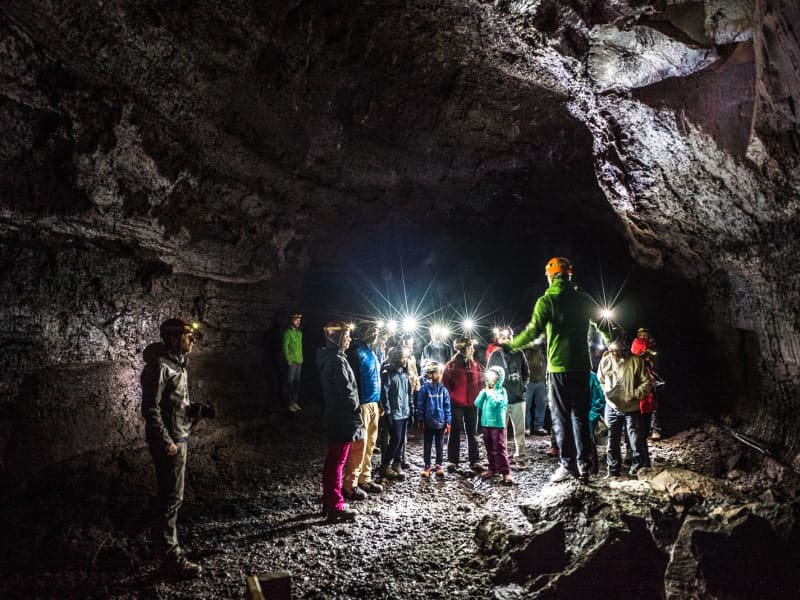
Víðgelmir in Borgajford is the largest of all caves in Iceland, 148,000 cubic metres, and one of the largest lava caves in the world.  It has beautiful ice formations and deep inside there are lava stalactites and stalagmites. Bones and jewelry from the viking age are a part of the archeological remains found in the cave in 1993. It has been preserved since 1993 and entrance is only allowed with proper guidance. Guides from "The Cave" arrange short (1,5 hour) and long (4 hours) tours. Please contact The Cave for information, availability and schedule. Víðgelmir lava cave is considered by specialists to be one of the most remarkable caves on earth.
Kirkjufell mountain
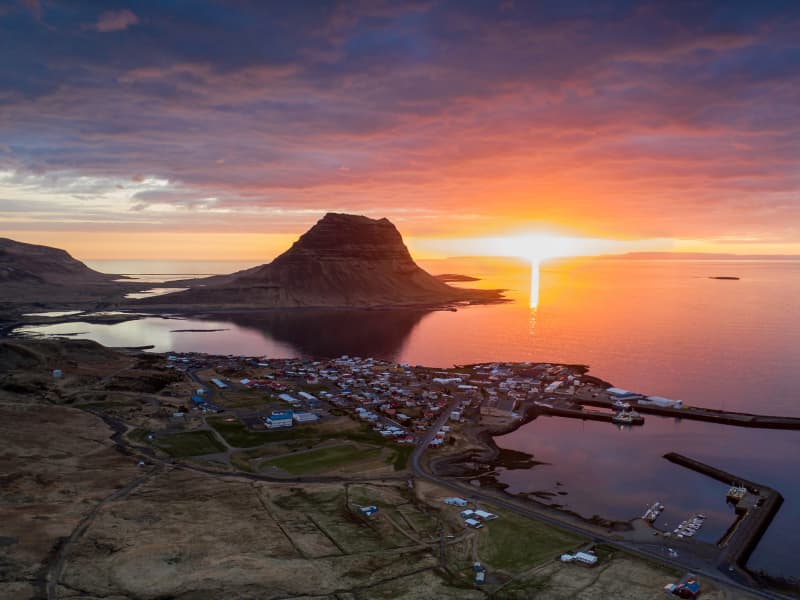
Kirkjufell – an Iconic Landmark of West Iceland Like stepping into a work of art – Kirkjufell holds a rare harmony of form, natural magic, and mysterious light. This is a place you’ll want to see – and feel – for yourself.  Kirkjufell rises dramatically, 463 meters above sea level, by the town of Grundarfjörður on the Snæfellsnes Peninsula. Its exposed and distinct geological layers offer valuable insights into the glacial history of the region. Standing alone like a sentinel overlooking Breiðafjörður Bay, Kirkjufell is one of Iceland’s most photographed and recognizable mountains. At the base of the mountain lies Kirkjufellsfoss, a picturesque waterfall that has become a popular foreground in countless iconic images. In summer, the vibrant colours of the sunset often set the sky ablaze as the sun dips gently into the sea beside the mountain. In winter, the northern lights frequently dance above and reflect on the surrounding waters – making this location a spectacular year-round destination for photographers and nature lovers alike.  The mountain’s striking, symmetrical shape has inspired many names throughout history. Danish sailors once called it “Sukkertoppen” (“the Sugarloaf”) due to its rounded peak rising from the sea, and older Icelandic sources refer to it as “Firðafjall.” Kirkjufell gained international fame when it appeared in Game of Thrones as the “Arrowhead Mountain”, a symbolic location north of the Wall in the battle against the undead.  Despite its allure, hiking up Kirkjufell is highly challenging and dangerous. The mountain features steep, slippery slopes and vertical rock faces that demand skill, proper equipment, and preferably a local guide. Climbing is strictly prohibited in winter. Multiple accidents and even fatal incidents have occurred when inexperienced or ill-prepared hikers underestimated the risks. Enjoy the mountain from a safe viewpoint – it’s just as impressive to behold as it is to climb. 
Gudrunarlaug Geothermal Pool
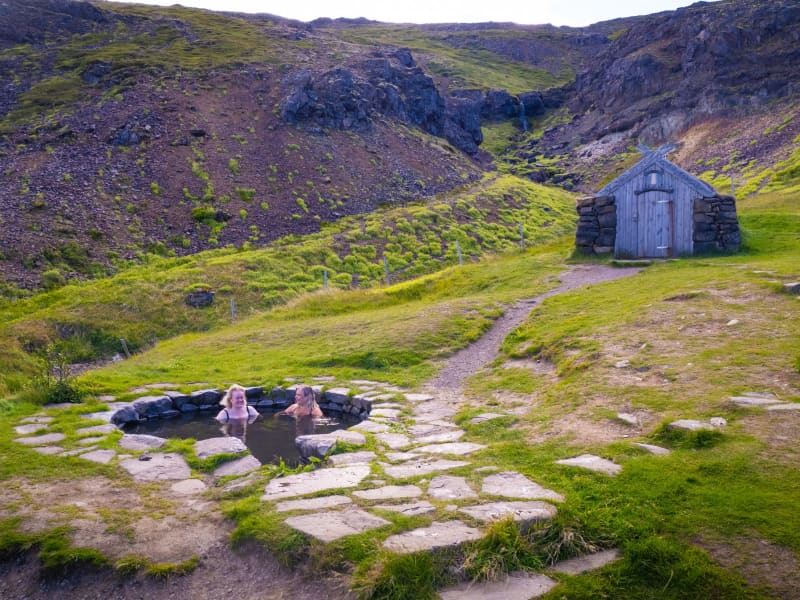
According to Laxdaela saga, Gudrun Osvifursdóttir used to dwell by a geothermal pool in Laugar in Saelingsdalur. The pool is mentioned in Sturlunga saga and it seems to have been used a great deal. The pool is believed to have been destroyed in a landslide. In 2009 a new pool was built near to the location where the old pool is thought to have been situated and named Gudrunarlaug. A changing facility, referred to as a ”house of modesty“ in Icelandic, was also built at the same time.
Reykholt in Borgarfjord
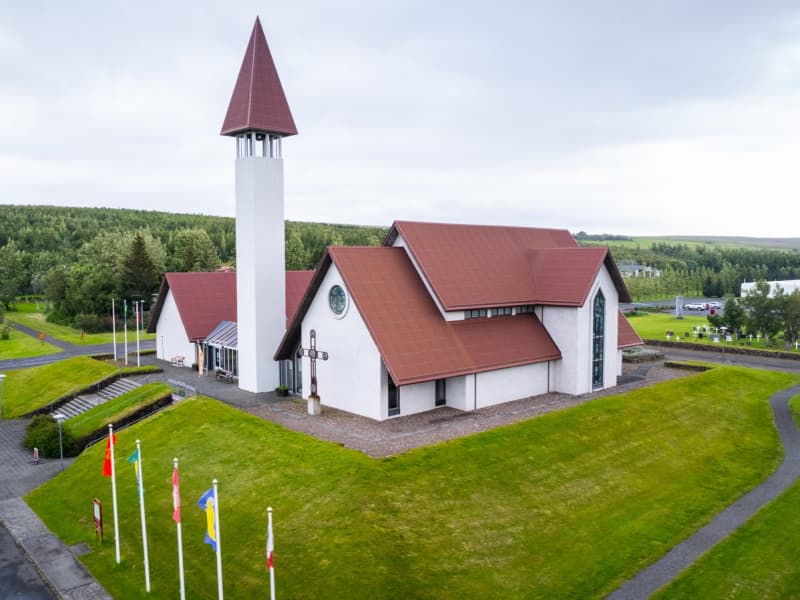
Reykholt is one of Iceland's most notable historical sites. It houses a cultural centre and a church. Reykholt is most famous for being the home of Iceland's best-known author Snorri Sturluson during the years 1206-1241. An ancient geothermally-heated pool, Snorralaug, is named after him. It is one of the few things preserved whole from Iceland´s medieval period. Snorrastofa is a cultural centre and institute for research in medieval studies. Snorrastofa offers historical exhibitions and guided tours and lectures. Music recitals are held in the church of Reykholt. Visit Reykholts website www.snorrastofa.is There is one hotel in Reykholt see more here. 
Klofningur
From the mountan Klofningur is a panoramic view over Breidafjordur Bay, Snaefellsnes Peninsula  and Bardaströnd. Viewing dial. It is possible to hike up the mountain from the farm Stakkaberg.
Arnarstapi
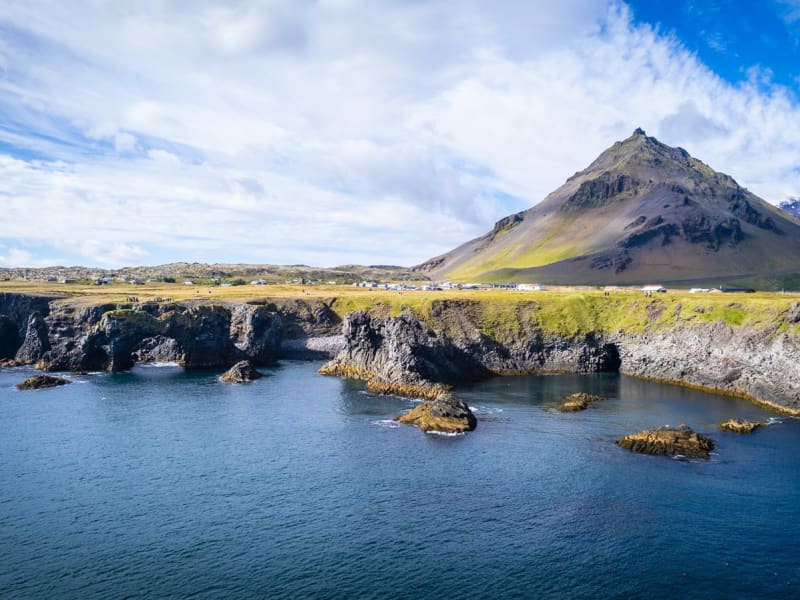
Arnarstapi was an important trading post in the past and had a much bigger population than it has now. Columnar basalt, ravines and grottoes surround the Arnarstapi pier. There is good anchorage for small boats. There is quite a large arctic tern colony in the village itself. A walk along the coastline is recommended to watch the birds and the magnificent lava formations. The seaside and the cliffs between Arnarstapi and Hellnar have been made a Natural Reserve in 1979. A very interesting old path follows the coastline where you can see old lending places of fishermen, lots of birds like the kittiwake, the Arctic tern and the fulmar and pass through a lavafield. If you take a guided tour, you will also hear a ghost story. A sculpture of Bardur Snaefellsas by Ragnar Kjartansson stands by the beach at Arnarstapi.
Krosshólaborg in Dalir
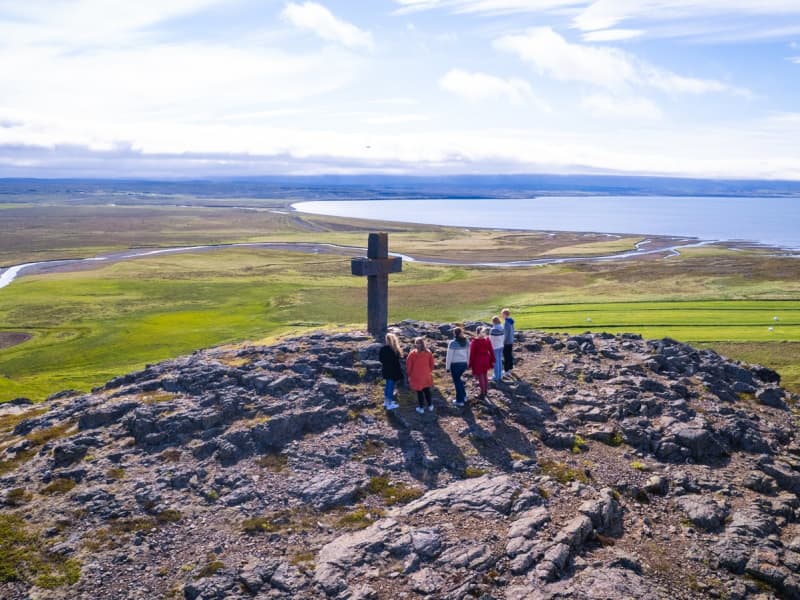
Auður djúpúðga ( Auður the Deep minded) was one of the settlers in Dalir. She was a Christian and had a cross raised at Krosshólaborg, where she went to pray. Her descentants considered Krosshólaborg a holy place. Women in Dalir set up a memorial of Auður, a stone cross in 1965. The remains of Auður´s first farm, Auðartóftir, are nearby.
Vatnshellir Cave in Snaefellsnes peninsula
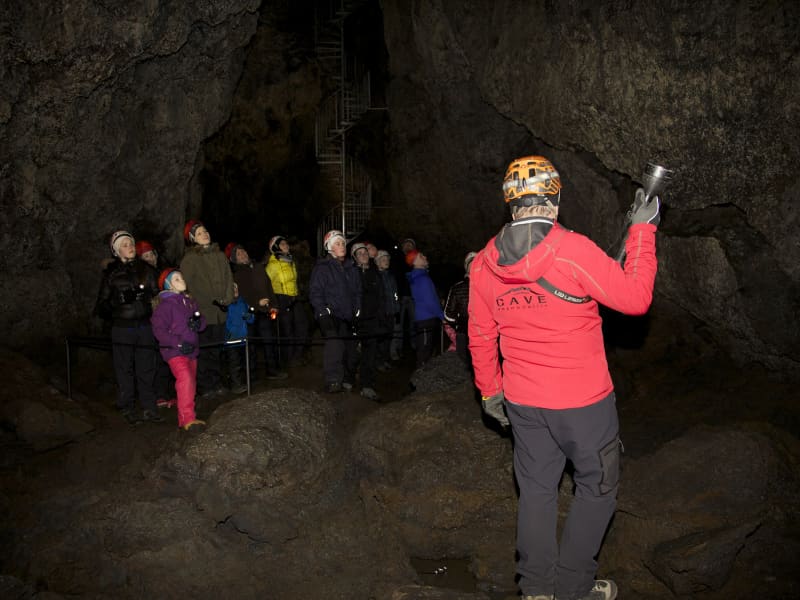
Exploring Vatnshellir Cave is truly an amazing and unforgettable experience. This 8.000 year old Lava Tube reaches over 200 meters and reaches 35 meters below the surface. During summer, guides tours are offered from 10am-6pm. During winter season 2 tours are offered per day. Please check the website www.summitguides.is for further information.  All guests are provided suitable equipment such as flashlights and helmets.  Hiking shoes and warm clothes are recommended.  10 minutes drive west of Arnarstapi, 25 minutes south of Hellissandur.  Further info:  info@summitguides.is - summitguides.is - (+354) 787 0001 
Búðakirkja Church
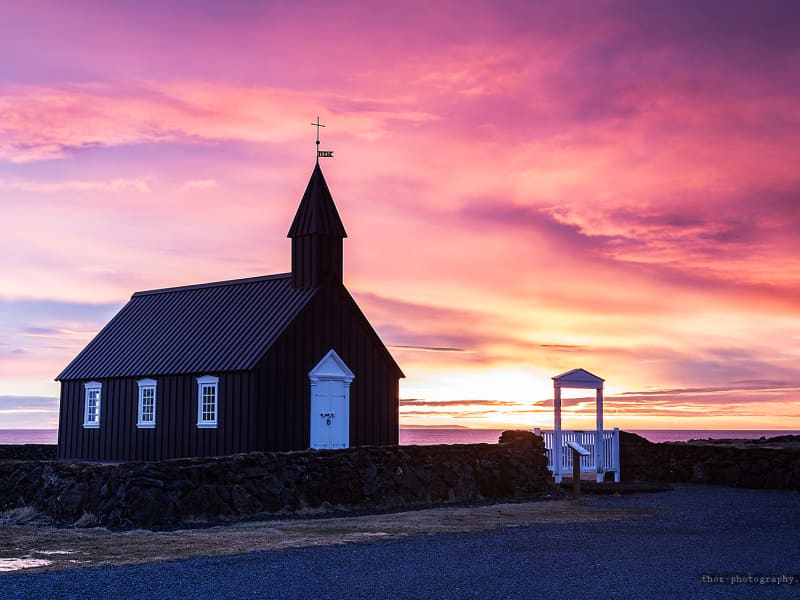
The little black church, Budakirkja Church is located at Budir on Snaefellsnes Peninsula. People come from around the world to seal their love at the church. 
Grabrok Crater
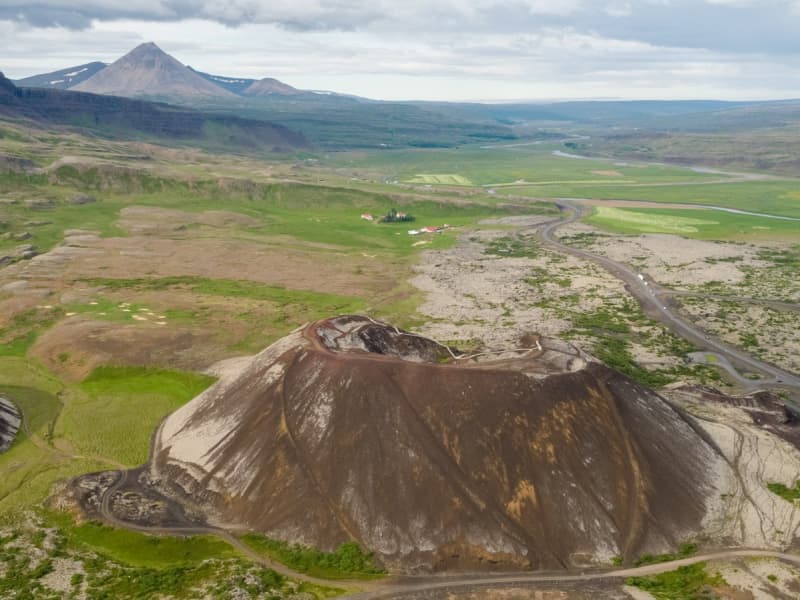
The largest of three craters in a short volcanic fissure.  Beautiful scenery over Borgarfjordur is  from the top of the Grabrok crater. Mt. Grabrok can be ascended by a marked trail from the main Ring road no. 1.
Saxhóll crater
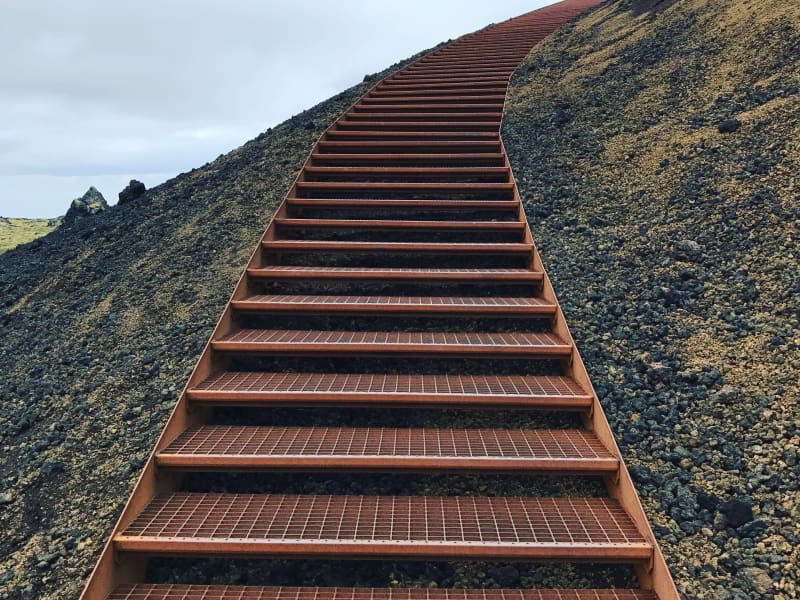
Saxhóll Crater is located in the Snaefellsjokull National Park. It´s easy to climb and the view from the top is spectacular. A low-set metal stair follows the path´s course to the top. The stair is made up of modules three meters long and 1,5 meters wide that hold seven treads each between solid stingers with open risers. The units join together like a necklace on the slope. The stairs were awarded Rosa Barba International Landscape Prize 2018 which are the fourth awards the project achieves since 2017. 
Snæfellsjökull National Park
Snæfellsjökull National Park is located at the edge of Snæfellsnes in the West part of the country. It is about 18km2 and the first national park to stretch from the top of the mountain and all the way down to the ocean. The Park is open all year long. There is a Visitor center at Malarrif and National Park Center at Hellissandur . See a map of the area in 3-D. Snaefellsjokull National Park